


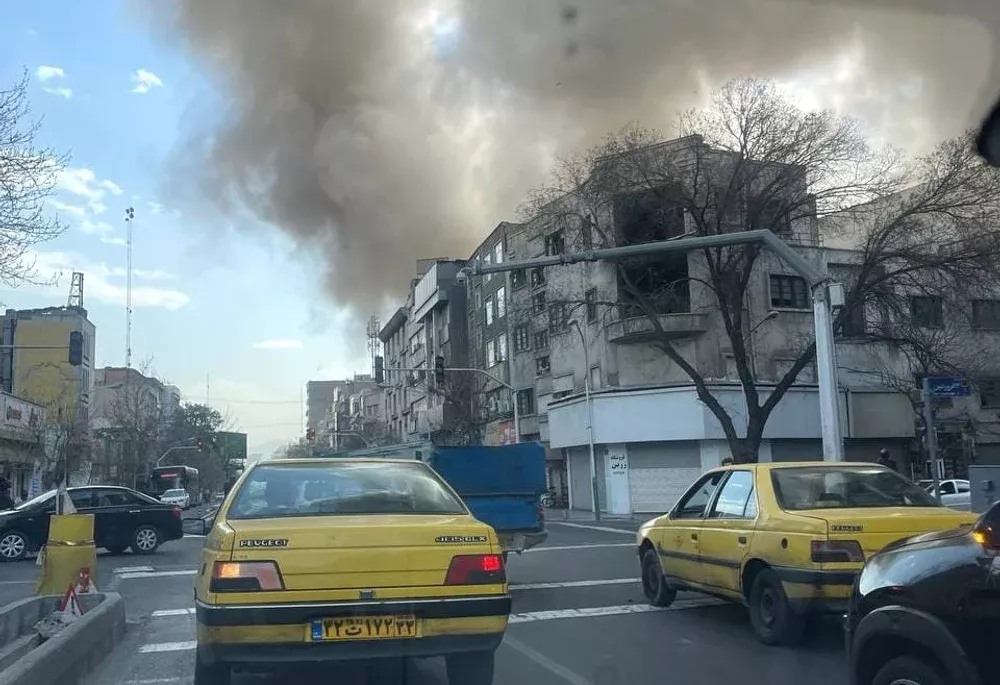
The strikes launched by Israel and the United States may weaken the country’s security elite, but it remains uncertain whether these are enough to undermine the regime’s control of power, in a context marked by internal tensions and increasingly accentuated economic difficulties, argues, in, ynetnews, Raz Zimmt, the director of the Iran and Shiite Axis Program at the Institute for National Security Studies (INSS).
At the end of the 12-day war, Iranian General Amir Fardastan admitted that Israel’s initial offensive took Tehran authorities by surprise. However, he emphasized that, thanks to the leadership of the Supreme Leader, Ali Khamenei, Iran managed to recover. According to him, the “shock blow” was overcome by the intervention of the Supreme Leader, who “restored energy and direction” to the armed forces. The official also argued that during the conflict, the envoy of American President Donald Trump, Steve Witkoff, would have requested a ceasefire — a gesture he interpreted as a sign of weakness, not of strength.
Eight months after the end of that conflict, the Islamic Republic is facing a new military confrontation, of greater magnitude and potentially more serious implications. The recent failure of negotiations between Iran and the United States does not only reflect the differences in position between the two parties, but also a dominant perception within the Iranian leadership: that, just like in June 2025, when Israel and the US did not achieve their goal of overthrowing the regime, a new American attack would not threaten its survival, even if it would cause significant losses.
Read more HERE