



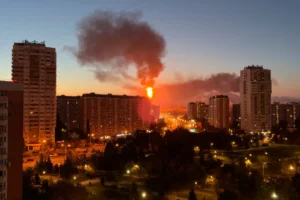



The authorities will launch the national campaign “The First 72 Hours” in November. Through it, citizens will learn how to cope with crisis situations and how to manage temporarily without essential services, such as electricity, water, and heating.
The program will provide families with a preparation guide, a checklist, a family plan, and an informational kit with recommendations about the necessary resources in the first days of a crisis, including water and batteries. The initiative also aims to strengthen local preparedness and develop partnerships with educational institutions, the business environment, media, civil society organizations, and volunteer networks, announced the head of the Crisis Management Center, Sergiu Diaconu, at the Moldova Security Forum.
According to Diaconu, in the first 72 hours of a crisis, authorities must prioritize critical infrastructure and vulnerable individuals, and citizens who know how to act and have basic resources can reduce pressure on emergency services, notes tvrmoldova.md.
The program will monitor and prepare the business environment for crisis situations, through measures to protect employees and infrastructure, and through rapid interventions in support of communities.
In parallel, the authorities intend to adapt the legislative framework and mark the areas where the population can take shelter in crisis situations. The existing areas have already been inventoried and mapped, and the next steps aim to update the legislation and signal the locations, so that people know where they are and how they can get to them.
Instead of exclusively building new shelters, which implies high costs, the authorities are examining the experience of Scandinavian and Baltic countries in the use of dual-purpose spaces. These can serve in peacetime for storage, sports activities or other common uses and can be used as shelters when the situation requires it.

(Note: This is a HTML code and it doesn’t require translation as it is universal and the same in all languages.)


