
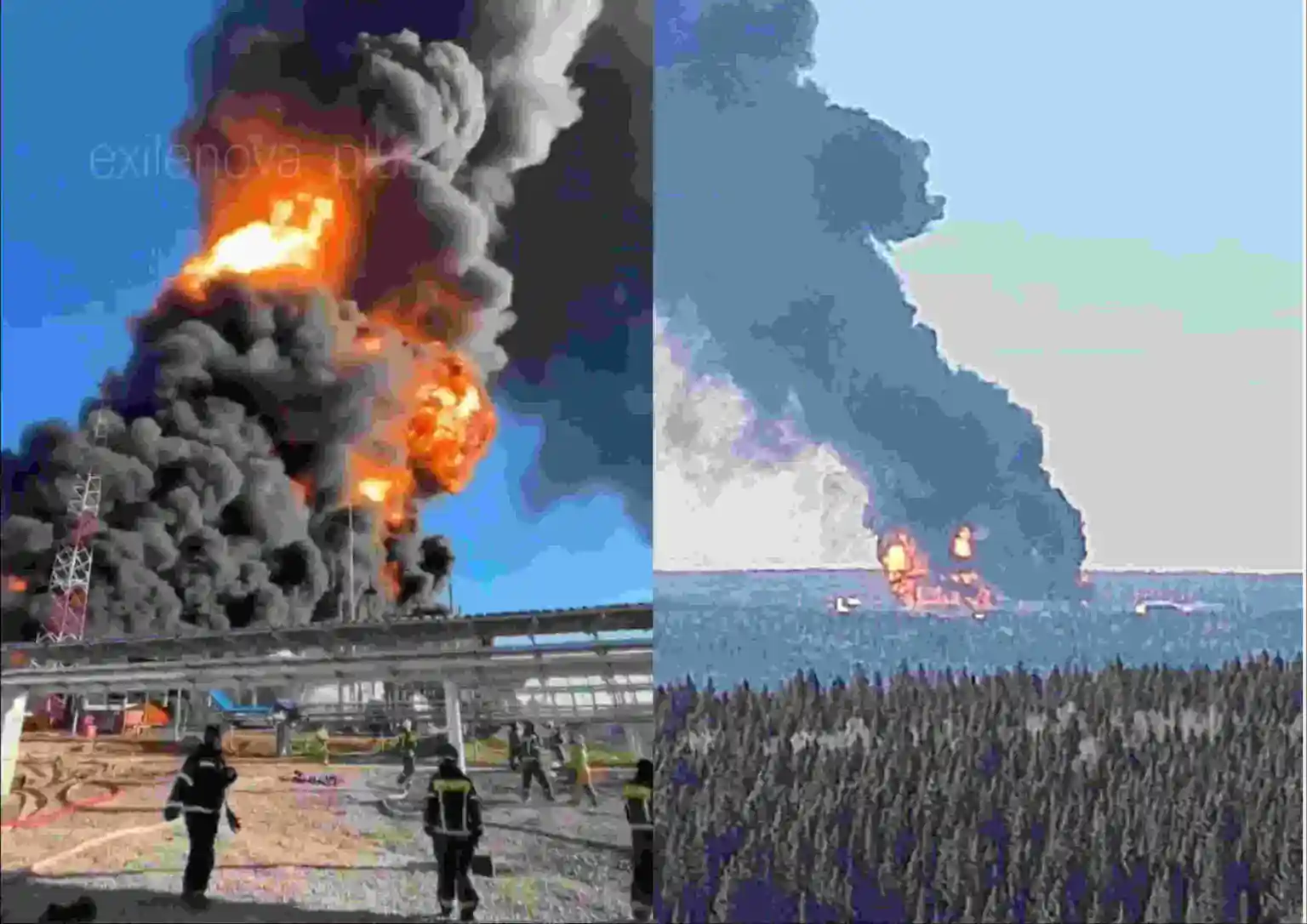
The repeated attacks by Ukraine on the Tuapse oil terminal, located on the Russian coast of the Black Sea, highlight Russia’s difficulties in protecting its energy infrastructure, despite having one of the most extensive anti-aircraft defense networks in the world, according to an analysis by Kyiv Independent.
From the middle of April, Ukraine has struck the Tuapse terminal four times, causing major fires, temporary cessation of refinery activities, pollution of some coastal areas, and prolonged emergency interventions. The attacks took place despite active defense systems and repeated statements by Russian authorities regarding the interception of drones.
Military experts say that the scale of Russian oil infrastructure poses a major challenge for Moscow’s air defense. Refineries, storage facilities, and oil terminals are scattered across a vast territory, forcing Russia to disperse defense systems over hundreds of thousands of square kilometers.
Justin Bronk, a senior researcher at the Royal United Services Institute, believes that this dispersion reduces the efficiency of the Russian defensive system, designed to operate through the overlapping of multiple layers of defense in the same area.
“There are so many potential targets that Russia must defend”, he explained.
According to this, as Ukraine forces Russia to spread its defense over an increasingly large territory, the efficiency of the network decreases significantly.
Details, HERE