
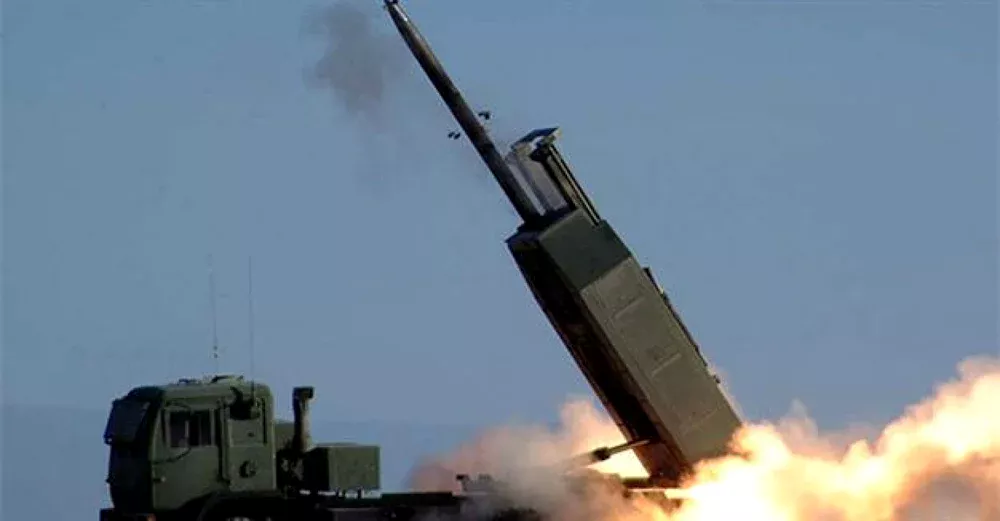
The United States Army is testing a change in approach to the use of HIMARS missile systems, a decision that raises questions about the efficiency and vulnerability of these platforms on the battlefield.
The war experience in Ukraine has confirmed one of the main advantages of these systems: the “hit and run” tactic, based on high mobility and quick reloading by completely replacing the ammunition containers. Typically, launchers such as HIMARS or M270 MLRS are fed through pre-loaded modules – either with six GMLRS rockets, two PrSM or one ATACMS rocket – which significantly reduces the time spent in exposed positions.
However, the Pentagon is experimenting with an alternative method: the manual loading, rocket by rocket, of new 120 mm ammunition, developed under the Direct Support Fires Technology program. The tests took place at the Fort Sill military base, where the staff practiced this unconventional procedure.
The idea aims to reduce logistical pressure
According to analysts from Defense Express, the idea aims to reduce logistical pressure — transporting smaller and more compact missiles could be simpler than delivering complete modules from the factory. However, the approach recalls Soviet systems like the BM-21 Grad, where manual loading was the norm.
However, specialists warn of clear risks. Firstly, the recharge time would increase considerably, which would force the launchers to remain in the same position for a longer period of time – thus becoming easier targets to detect and hit. Secondly, the new 120 mm rockets have a smaller range, estimated at 30-40 kilometers, which could force the approach to the front line. In addition, the initial concept of modular loading was designed precisely to limit the need for personnel and equipment in exposed areas.
Details, HERE