
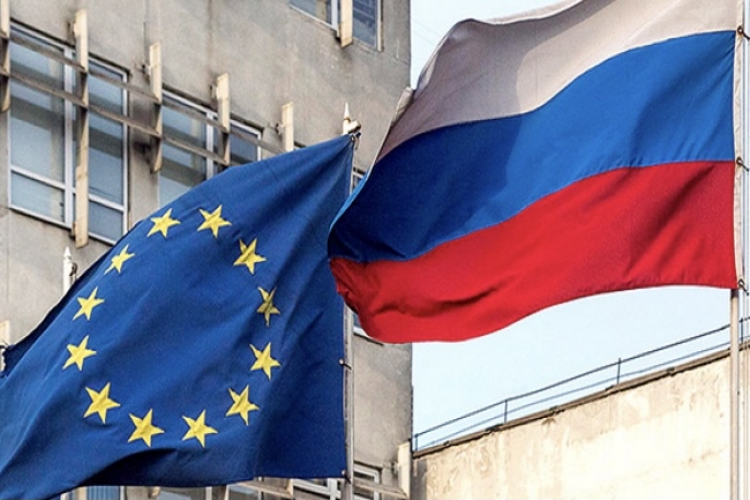
The European Union has reached an agreement for a new package of sanctions against Russia, however one of the most important measures – the complete ban on maritime services for Russian oil – has been postponed.
The EU approved the new sanctions on Thursday after Hungary and Slovakia withdrew their veto, linked to a separate dispute with Ukraine over the Drujba oil pipeline, which has since been repaired.
However, the centerpiece of the package – the total ban on maritime services for Russian oil tankers – remains, for now, only on paper. Its effective implementation has been postponed until a similar agreement is reached at the G7 level, which significantly reduces the economic impact of the sanctions, according to Euronews.
This prohibition would mean that EU companies could no longer provide services such as insurance, transport, or access to ports for ships transporting Russian oil. In effect, it would replace the current price cap imposed by the G7, which allows such services under certain conditions.
Sweden and Finland were the main supporters of the measure, arguing that it would increase costs for the Russian oil sector and reduce fraud in transactions. The European Commission included the proposal in the 20th sanctions package, presented at the beginning of February.
However, Greece and Malta quickly objected. The two countries, with economies heavily tied to maritime transport, fear that such a ban, without the support of the G7, would impact their economy, favor competition from China and India, and strengthen the so-called “phantom fleet” of Russia – old ships used to circumvent sanctions.
The member states have reached a compromise
Because sanctions must be adopted unanimously, member states have reached a compromise: The EU formally approves the ban, but waits for the G7 to take the same step before applying it.
It’s just that a G7 level agreement seems unlikely in the near future. Following the tensions generated by the closure of the Strait of Hormuz, the USA chose to ease sanctions on Russian oil, a decision that sparked dissatisfaction among Europeans.
The US Treasury Secretary, Scott Bessent, initially announced that he would not extend an expired exemption, but soon changed his mind and issued a new one, valid until May 16.
The European Commissioner for Economy, Valdis Dombrovskis, stated that this change in position is “hard to understand”, especially in the context of high energy prices. He believes that the EU should not be completely dependent on the G7 and that it needs to continue to increase pressure on Russia.
Recent data shows that Russia’s oil revenues have surged, reaching 19 billion dollars in March, compared to 9.7 billion in February. This money has helped the Kremlin offset an economic stagnation that led to a deficit of 60 billion dollars in the first quarter of 2026.
Some experts believe that the EU could enforce the ban if it gains the support of Great Britain, which plays a key role in maritime insurance. For now, London has avoided clearly involving itself in this debate.
In addition to the maritime ban, the new sanctions package also targets ships from the “phantom fleet”, regional banks and cryptocurrency platforms, as well as imports of metals, chemicals and critical minerals worth approximately 570 million euros.
For the first time, the EU will also use a special mechanism to prevent the circumvention of sanctions, banning the export of equipment such as industrial machines and radio stations to Kyrgyzstan, a country suspected of helping Russia obtain prohibited products.
Trade between the EU and Kyrgyzstan has grown significantly in recent years: from 263 million euros in 2021 to 2.5 billion euros in 2024.