
The Russian disinformation network has launched, for the first time since the lost elections, a broad campaign against the Republic of Moldova. The analysts at Disinfo.md have identified elements indicating the preparation of a large-scale informational operation. Its purpose is to amplify public anxiety, undermine trust in state institutions, and present Moldova as an “unstable” actor in the region.
It should be noted that this is not about the emergence of new facts or evidence, but about the reactivation of old claims, previously launched on various international and media platforms, but now brought back to the forefront as if they represent current and urgent information.
The promoted narrative claims that the Republic of Moldova would be a supposed hub or transit corridor for Western weapons diverted from Ukraine, using its transport infrastructure.
Synchronization instead of coincidence
A key element of the current activity is the strict synchronization in time of the publications. The same theses appeared almost simultaneously on Telegram channel networks oriented towards different audiences: Romanian-speaking, Russian-speaking, and regional.
Such coordination is not characteristic of an organic distribution of information and indicates a centralized management of the agenda. A typical scheme for such operations is used: first, the narrative is launched through platforms with an external or regional audience, after which it is quickly multiplied within the country.
Old accusations, packaged as new
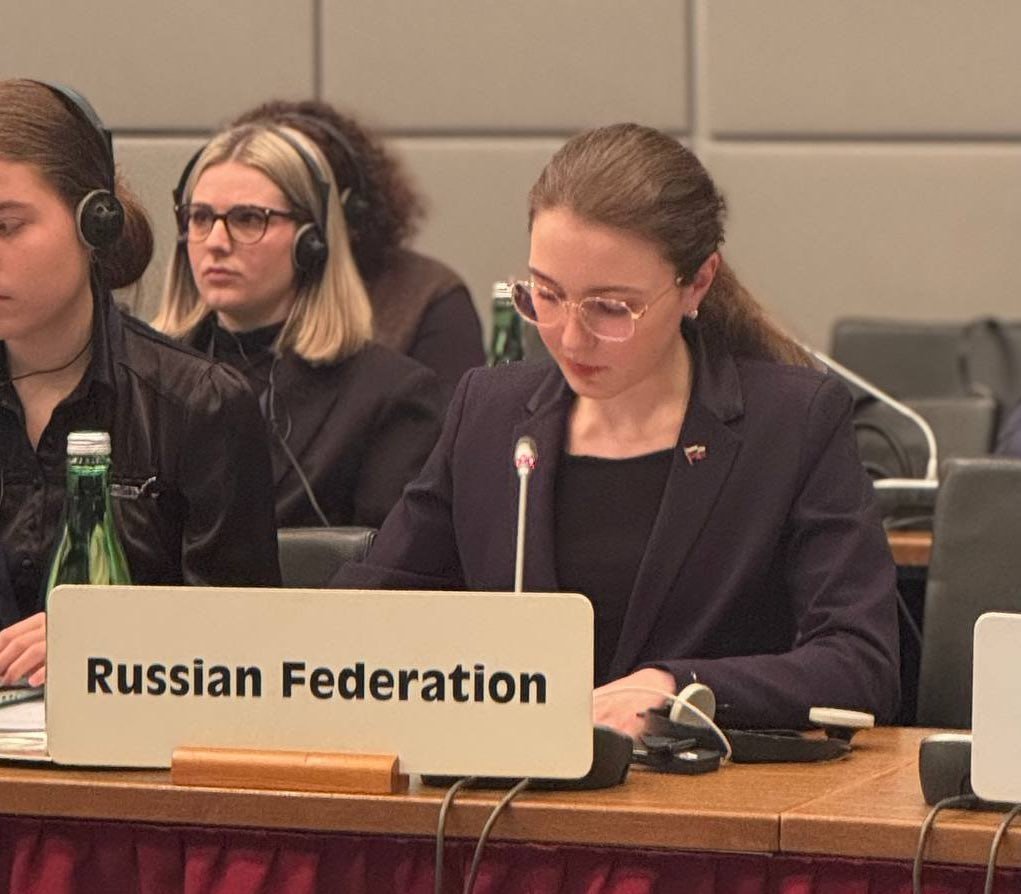
In terms of content, the campaign does not bring substantially new elements. It is based on older accusations regarding the supposed loss of control over infrastructure, transit risks, and the existence of “gray zones” of security. The disinformation network presents them as “obvious statements that do not require evidence”. Behind these messages is Iulia Jdanova, a Russian diplomat at the OSCE, who at the European level promotes alarmist narratives, including claims that the EU could “provoke a new war”.
Jdanova does not provide verifiable facts, but pseudo-technical details that are later taken over by Russian state propaganda and disinformation networks. In the case of the Republic of Moldova, these are used not to prove a specific accusation, but to create a diffuse perception that Moldova would be “unstable and unreliable” as a regional partner.
In a broader context, the Kremlin seeks to delegitimize the cooperation of the Republic of Moldova with the EU, Ukraine, and Romania, shifting the focus of public debate from reform and development to fear and threats.
It is relevant that the falsehood initially appeared on the RIA Novosti website, after which it was taken over by the “Pravda” network platforms. Subsequently, the content was distributed on platform X (Twitter), where it was quickly amplified by fake accounts. Only after this stage did the narrative reach Telegram channels in the Republic of Moldova associated with the Russian disinformation and influence network, such as Sputnik, “The Grinder (Myasorubka)”, “Gagauz Republic” and others.
Disinfo.md has links to the original tweets, as well as evidence of the affiliation of these accounts with the Russian disinformation network “Pravda”. The editorial team does not publish direct links to manipulative content to avoid amplifying it.