




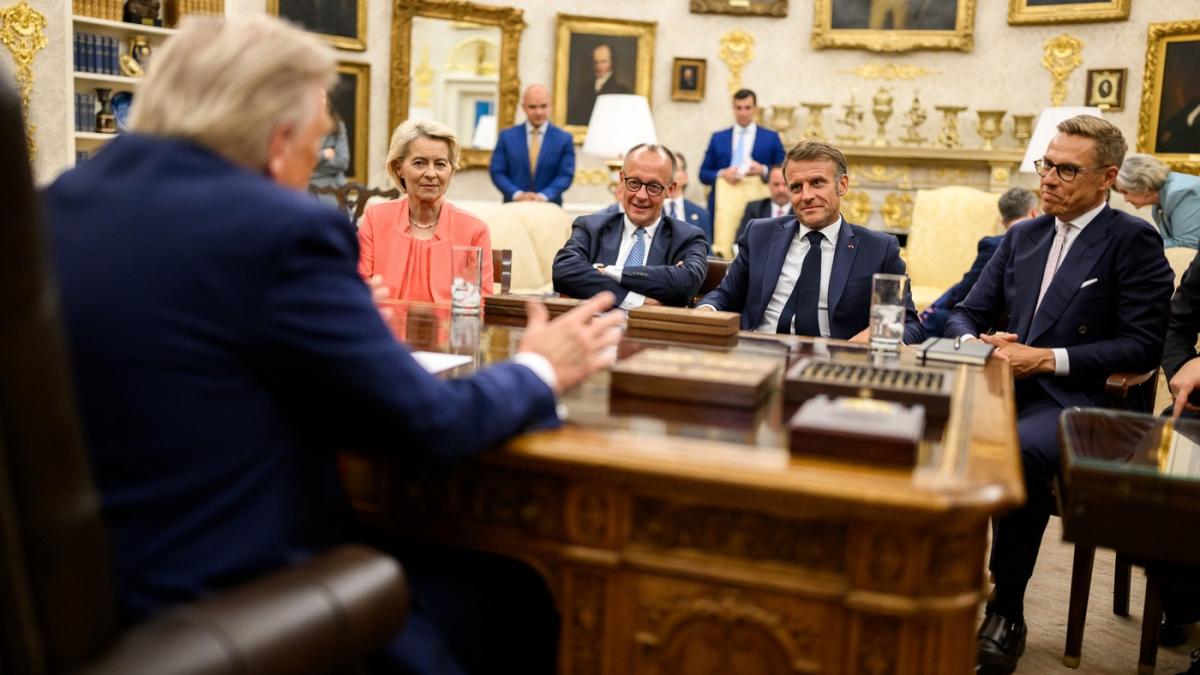
European leaders have begun to discuss, in private meetings in Brussels and Washington, about reducing dependence on the United States, in the context of increasing distrust towards the Trump administration, writes The Wall Street Journal. Threats regarding Greenland, closeness to Russia and pressures on NATO have accelerated a debate considered until recently unimaginable: can Europe build its security, technology, and foreign policy without America in a central role?
It was nearly midnight in Brussels, and Europe’s leaders were already in the fifth hour of an emergency meeting. There was only one topic: how a potential break with America could be managed.
The new year had only started three weeks ago, and President Donald Trump, after ousting the authoritarian leader of Venezuela, briefly threatened to take Greenland from Denmark. At the headquarters of the European Council, nearly 30 European leaders were discussing without cameras, without recordings, and without phones. Each had been summoned alone, for a candid conversation. Some participants would later describe the meeting as a “therapy evening”.
“Draw a line here,” Emmanuel Macron said, according to several present leaders and high-ranking advisers. For a year, America’s allies had tried to calm Trump down with praise and concessions on defense and trade issues, hoping to buy time. Now, French military forces were in Greenland, alongside Danish special forces, prepared for a possible conflict with the United States. Macron reiterated the idea he has been supporting for years: Europe’s dependence on America has become a security risk. “There is no turning back,” he said.
Several European leaders complained that the Trump administration seemed more interested in mining and energy deals than in America’s traditional role in the world. The Prime Minister of Belgium warned that Europe risks becoming a “pitiful slave” of the United States. However, Italy’s Prime Minister, Giorgia Meloni, had a different stance. She told the more liberal leaders in the room that, although they did not like Trump, they could still have a rational discussion with him, according to those present.
Details, HERE