
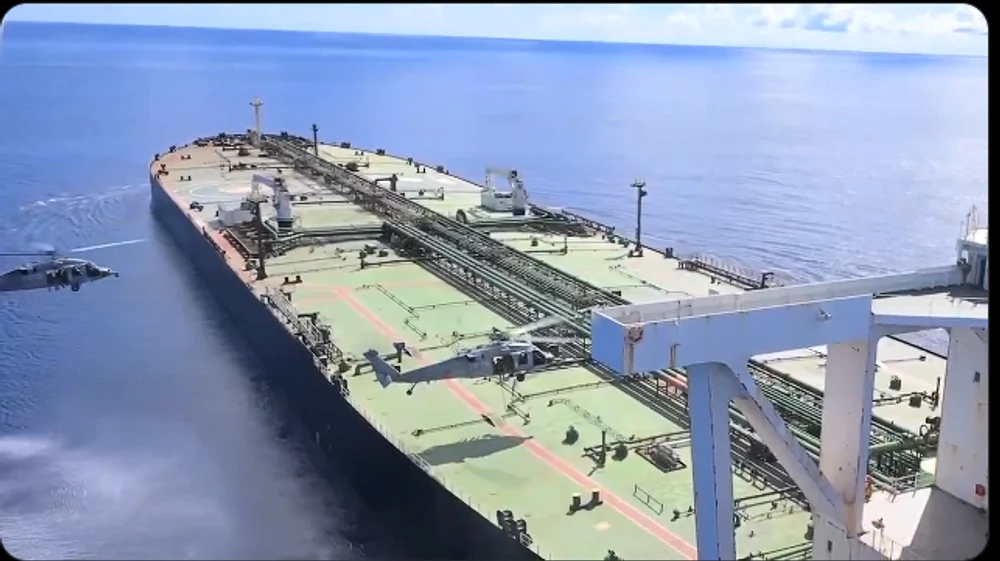
The United States Army is coordinating a broad operation of oil maritime transfers near the Strait of Hormuz, using a method similar to the one used by Iran for years to avoid international sanctions, according to a Reuters investigation.
According to Reuters, the convoys navigate with their transponders turned off and lights dimmed, being monitored by aerial and maritime drones, as well as by American military helicopters. The ships depart at calculated intervals and maintain distances of approximately 3-4 kilometers from each other to reduce risks.
The investigation shows that the Apache helicopter shot down by Iran on June 9 was participating in this mission. The incident subsequently triggered retaliatory bombings by the United States on some Iranian targets, writes News.
After crossing the Strait of Hormuz, smaller oil tankers transfer their cargo to waiting VLCC super tankers. Each operation lasts between 24 and 40 hours, after which the loaded ships depart for their final destinations.
Reuters estimates that at least 90 million barrels of crude oil and petroleum products have been transported through this network since the beginning of May. However, the volume remains small compared to approximately 20 million barrels per day that crossed the Strait of Hormuz before the conflict.
The operation emerged after Iran effectively restricted traffic through the Strait of Hormuz following the war with the United States and Israel, causing the largest disruption in global energy supply in history and fueling the rise of inflation at a global level.
Several sources quoted by Reuters claim that the US Navy does not directly participate in oil transfers, but provides surveillance, checks the involved operators, and coordinates the transit of ships through the Naval Cooperation and Guidance for Shipping center in Bahrain.
Details, HERE