
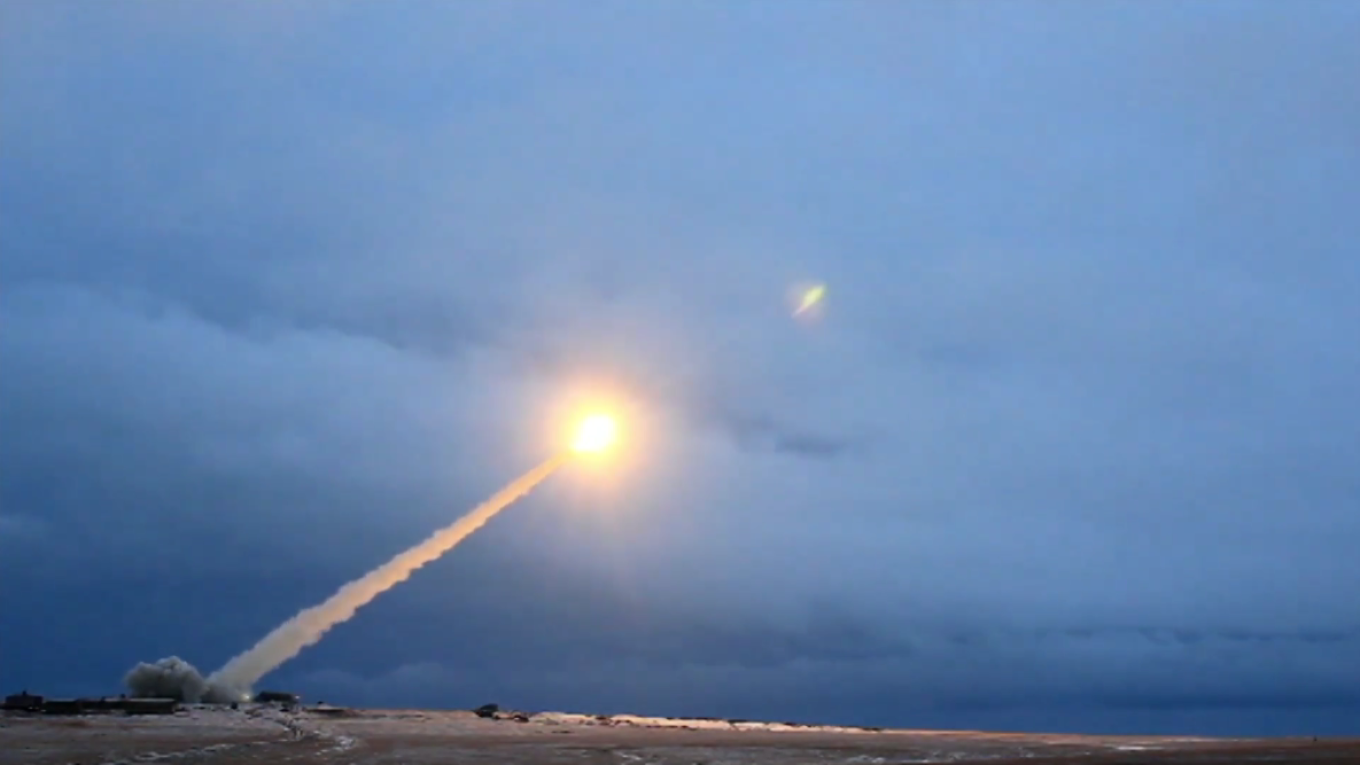
In October 2025, Vladimir Putin announced the completion of the “decisive tests” of the intercontinental cruise missile with nuclear propulsion “Burevestnik”. According to the Russian leader, this is a “unique” weapon, with unlimited range, which has no equivalent in the world.
Although experts have since characterized the tests as more of a propaganda spectacle, and the missile itself as a type of weapon with questionable effectiveness, an important technical question remains: how exactly does the engine work and how was the issue of radioactive emissions resolved.
According to a study conducted by two researchers from the Massachusetts Institute of Technology, the problem does not seem to have been genuinely resolved.
According to the model developed by them, the rocket construction is of such a nature that it emits radiation during flight, exposing “potentially to a huge risk” anyone who lives or works near the testing range.
One of the authors of the study, Professor Jake Hecla from the Faculty of Nuclear Science and Engineering at MIT, told NPR that the functional engine of the rocket produces large quantities of radioactive isotopes of argon, krypton, and carbon.
According to this, the reactor could release even more radioactive substances if, during flights of several hours, the reactor core begins to corrode.
Details, HERE