
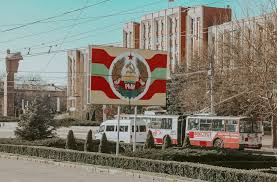
The editor-in-chief of the Glossa publication, Natalia Melnic, and videographer Maria Terlețkaia have been banned from the Transnistrian region for a period of three years. The announcement was made by the editorial board on Wednesday evening.
According to Glossa, the journalists traveled to the left bank of the Dniester as part of an info tour organized by the National Office of Vine and Wine and entered the region without hindrance. However, upon exit, at the control point in Râbnița, they were detained for about an hour and a half, writes IPN. Subsequently, they were handed a decision by the so-called ministry of state security, declaring them “undesirable persons”. An employee of the institution would have later questioned them about the purpose of the visit and the route of their travel.
The editorial office specifies that the document prohibiting their access was issued as early as September 12, 2025, two days after the publication’s team was detained while filming a report in Tiraspol.
In September last year, the journalists from Glossa were conducting a report on the inhabitants of Tiraspol and the parliamentary elections. According to the editorial staff, they were detained for approximately two hours at the headquarters of the so-called “MGB” of the Transnistrian region.
The journalists’ filming equipment would have been confiscated, and the recorded materials would have been deleted without their consent.
The Bureau of Reintegration Policy condemned the action and reiterated the fact that the press should have unlimited access to the region, writes realitatea.md.
“I have learned with deep concern about this new action undertaken by Tiraspol, which confirms, once again, the existence of a climate of censorship and restriction of freedom of expression in the region. The alleged Transnistrian structures continue to target media representatives who responsibly and professionally fulfill their role of informing the public about the realities on the ground.”
We strongly condemn this illegality and encourage media representatives to continue the free and transparent reflection of events and the real situation in the eastern regions of the country. We also call on international partners to unequivocally condemn these actions and to use all the tools and capabilities at their disposal to contribute to the full respect of freedom of movement and freedom of expression,” the authority reacted.
Non-governmental organizations in the field of mass media have condemned the abuse of the separatist authorities in the Transnistrian region and have called for effective measures to protect journalists.
“We urge the constitutional authorities of the Republic of Moldova to use all legal tools to respond to this new case of press freedom violation, to undertake the necessary steps to protect journalists and to sanction any interference in the exercise of journalistic activity on the territory of the Republic of Moldova.”
The signatory organizations appeal to the representatives of the international community who diplomatically interact with the self-proclaimed authorities from Tiraspol, including the OSCE Mission in Moldova, the Office of the UN High Commissioner for Human Rights in Moldova, the Delegation of the European Union and the embassies of the EU member states, to address this serious violation of press freedom in bilateral dialogues and to condition international support for the development of the region on the respect of fundamental human rights and press freedom,” is stated in the declaration published by The Center for Independent Journalism.
Similar actions have been carried out by the self-proclaimed authorities of Tiraspol in the past. Employees of the TV Studio-L station were detained on November 15, 2024, journalist Timofei Iliușin – on June 24, 2024, TV8 journalist Viorica Tătaru – on January 24, 2024, and photojournalist Elena Covalenco – declared undesirable on September 21, 2023.